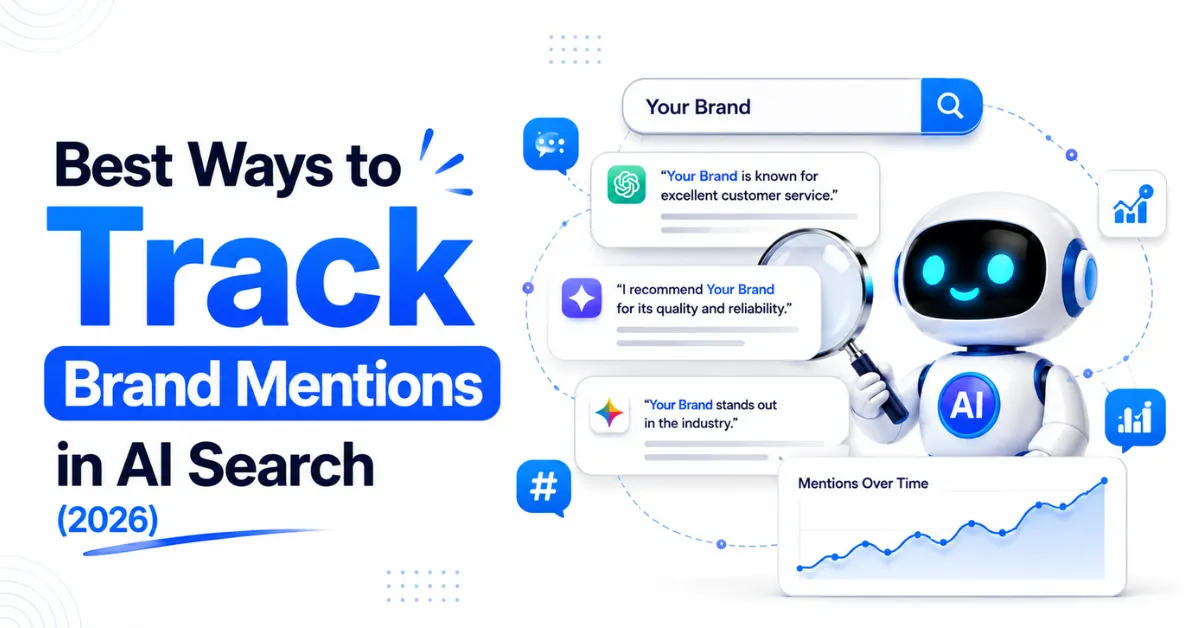
If you Google your own brand name today, you probably know exactly where you stand. But what happens when someone asks ChatGPT, “What’s the best SEO agency for small businesses?” Does your brand show up? Most business owners have no idea, and that’s a problem, because AI search is quickly becoming the new front door to discovery.
This shift is part of a bigger change happening across SEO right now. People aren’t just typing keywords into Google anymore. They’re asking AI chatbots full questions and trusting the answers they get back. If your brand isn’t part of that answer, you’re invisible to a growing number of potential customers, no matter how well you rank on Google.
In this guide, we’ll walk through exactly how to track brand mentions in AI search, why it matters more than most businesses realize, and what you can do to actually show up when it counts.
What Does It Mean to Track Brand Mentions in AI Search?
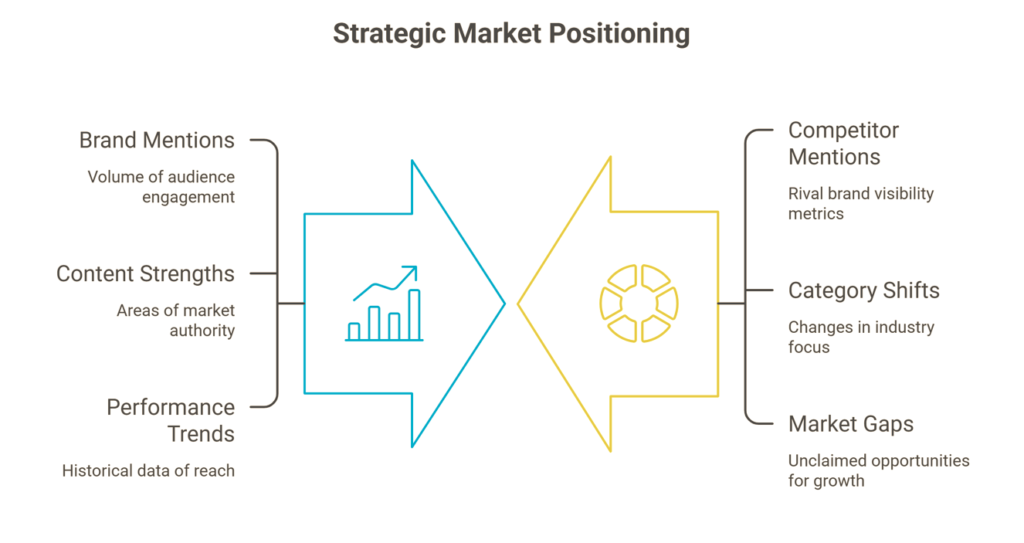
Tracking brand mentions in AI search means checking whether AI tools like ChatGPT, Gemini, Claude, and Perplexity mention your brand when people ask them questions related to your industry. It’s similar to checking your Google rankings, but instead of looking at a list of blue links, you’re looking at what the AI actually says in its answer.
There are usually three ways your brand can show up in an AI answer:
- A simple mention – your brand name appears in the response, but there’s no link or source attached to it.
- A citation – the AI links directly to a page on your website as the source of its information.
- A recommendation – the AI actively suggests your brand as a good option, often using phrases like “best for” or “top choice.”
Out of these three, recommendations are the most valuable. A mention is nice, but a recommendation is what actually convinces someone to choose you over a competitor. Understanding this difference is the first step before you even start tracking anything.
Why Brand Mentions in AI Search Actually Matter
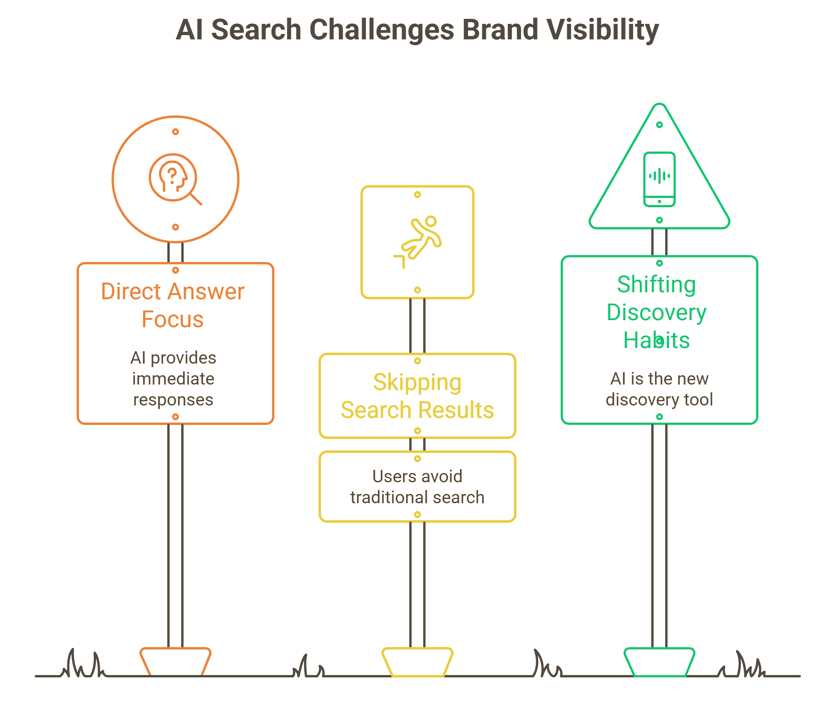
A few years ago, almost all online discovery happened through traditional search engines. Now, more and more people are skipping the search results page entirely and just asking an AI assistant for a direct answer.
Think about how this plays out in real life. Someone wants to hire an SEO agency. Instead of typing “best SEO agency” into Google and scrolling through ten results, they ask ChatGPT, “Which SEO agency should I hire for my small business?” The AI gives them two or three names. That’s it. That’s the entire shortlist the person is going to consider.
If your brand isn’t one of those two or three names, you never even get a chance to make your case. This is exactly why tracking brand mentions in AI search has become so important for any business that wants to stay visible going forward.
Here’s what makes this different from regular SEO tracking:
- There’s no “page two.” On Google, even if you’re not #1, you might still get found on page two or three. In an AI answer, you’re either mentioned or you’re not. There’s no in-between.
- The same question can give different answers. Ask the same AI the same question twice, and you might get slightly different brands mentioned. This makes tracking trickier than checking a Google ranking.
- Sentiment matters just as much as presence. Being mentioned in a negative or neutral way (“avoid this for enterprise clients”) is very different from being recommended positively. You need to know which one is happening to you.
- It’s a pre-click influence. By the time someone visits your website after an AI conversation, they’ve often already decided you’re worth considering. That decision happened before any click was tracked in your analytics.
7 Practical Ways to Track Brand Mentions in AI Search
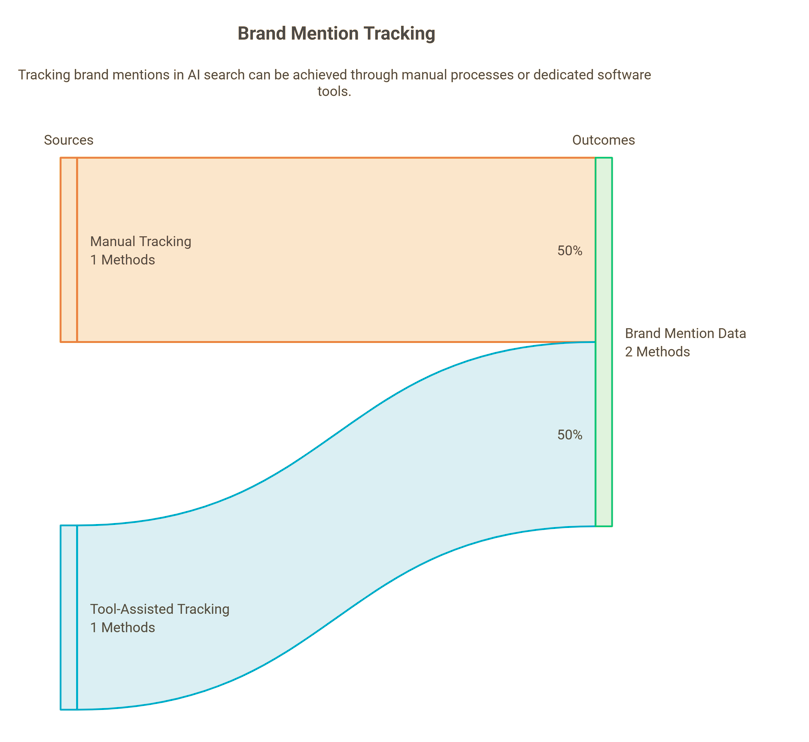
Now let’s get into the actual process. Here are the steps you can follow, whether you’re doing this manually or with the help of a dedicated tool.
1. Build a List of Real Questions People Would Ask
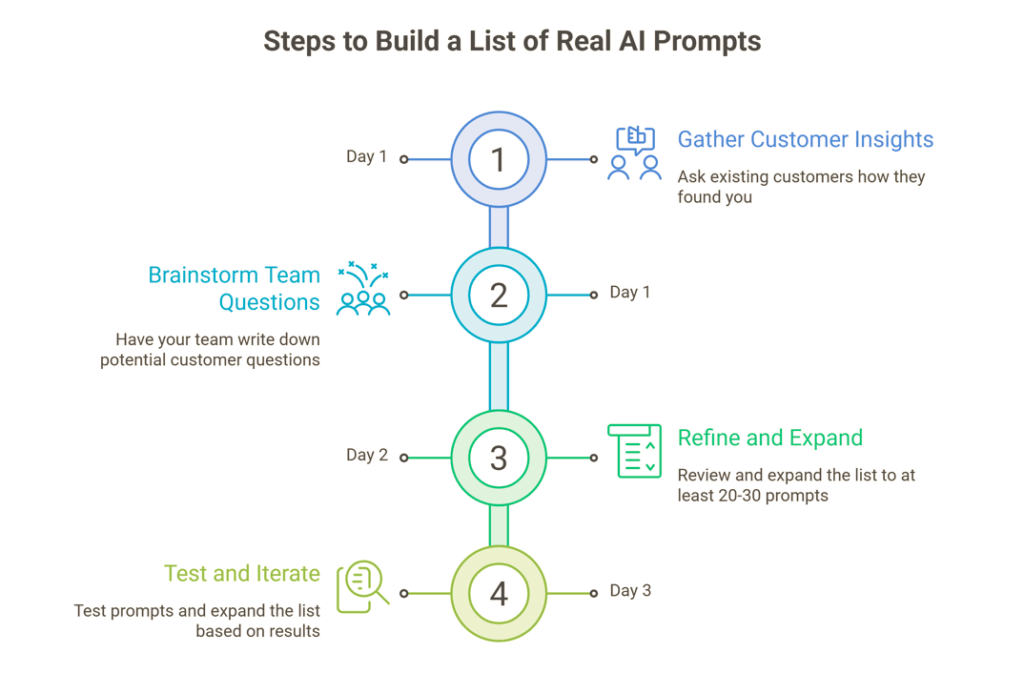
Before you can track anything, you need a list of prompts that reflect how people actually talk to AI tools. This is different from regular keyword research, because AI prompts tend to be longer and more conversational.
Instead of a short keyword like “SEO agency,” think about full questions like:
- “What’s the best SEO agency for a small ecommerce store?”
- “How much does SEO typically cost for a small business?”
- “What should I look for in a monthly SEO package?”
A good way to build this list is to ask your existing customers how they found you, or simply ask your team to write down every question a potential customer might ask before hiring you. Aim for at least 20 to 30 prompts to start with. You can always expand this list later once you see which ones produce useful results.
2. Test the Same Prompts Across Multiple AI Platforms
Don’t rely on just one AI tool. Each platform pulls information differently and may favor different sources, so your brand could show up strongly on one and be completely missing on another.
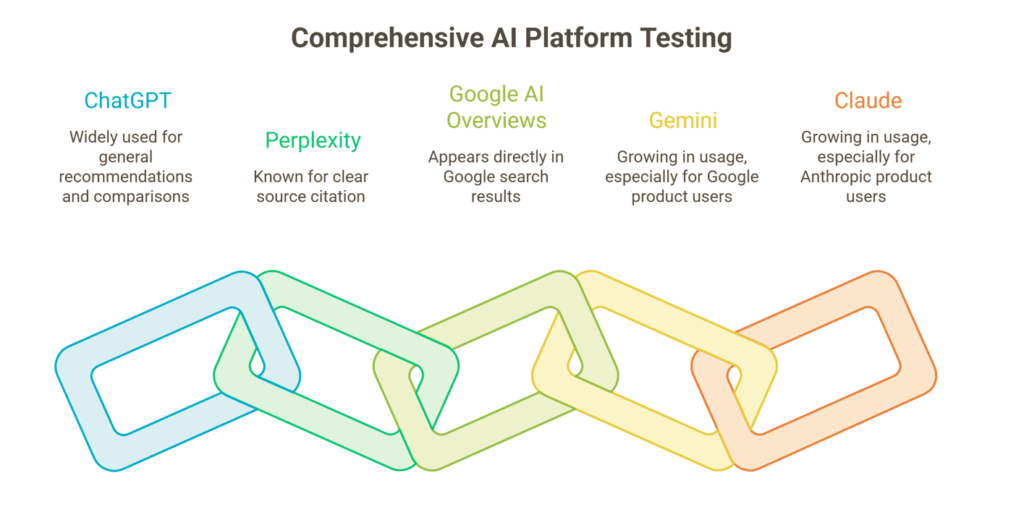
At a minimum, test your prompts across:
- ChatGPT – widely used for general recommendations and comparisons.
- Perplexity – known for showing its sources clearly, which makes it easier to check citations.
- Google AI Overviews – appears directly inside regular Google search results, so it’s worth checking even if you’re already tracking traditional rankings.
- Gemini and Claude – both are growing in usage and worth checking, especially if your audience uses Google or Anthropic’s products regularly.
Run each prompt manually at first if you’re just getting started. Copy the prompt, paste it into each tool, and note down what comes back. It’s a bit of manual work, but it gives you a real, honest picture of where you stand.
3. Check Not Just If You’re Mentioned, But How
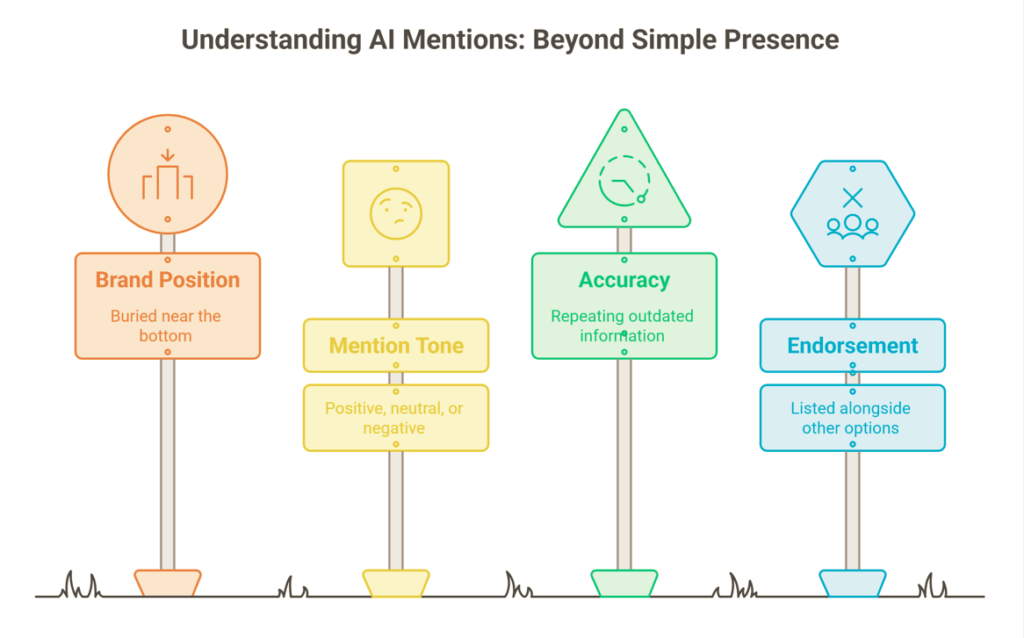
This is the step most beginners skip, and it’s the one that matters most. Getting mentioned isn’t automatically good. You need to actually read the full response and ask:
- Is my brand mentioned early in the answer, or buried near the bottom?
- Is the tone positive, neutral, or negative?
- Is the AI describing me accurately, or repeating outdated information about my pricing or services?
- Am I being recommended, or just listed alongside five other options with no real endorsement?
A simple way to do this without any fancy tools is to create a basic spreadsheet. For every prompt, log the brand’s position, the tone of the mention, and whether a link was included. After running through 20 to 30 prompts, patterns will start to appear pretty quickly.
4. Track Which Sources the AI Is Actually Citing
When an AI tool gives a citation, it’s telling you exactly which web pages it trusts enough to pull information from. This is gold, because it tells you precisely what kind of content earns trust in your industry.
Pay attention to two things:
- Is your own website ever cited? If yes, which specific page? That page is doing real work for you, and you should keep it updated and maybe even expand it.
- If you’re not cited, who is? Look at the third-party sites the AI relies on instead, whether that’s a review site, a comparison blog, or a directory. These are the sites you may want to reach out to for coverage, or study to see what kind of content they have that yours doesn’t.
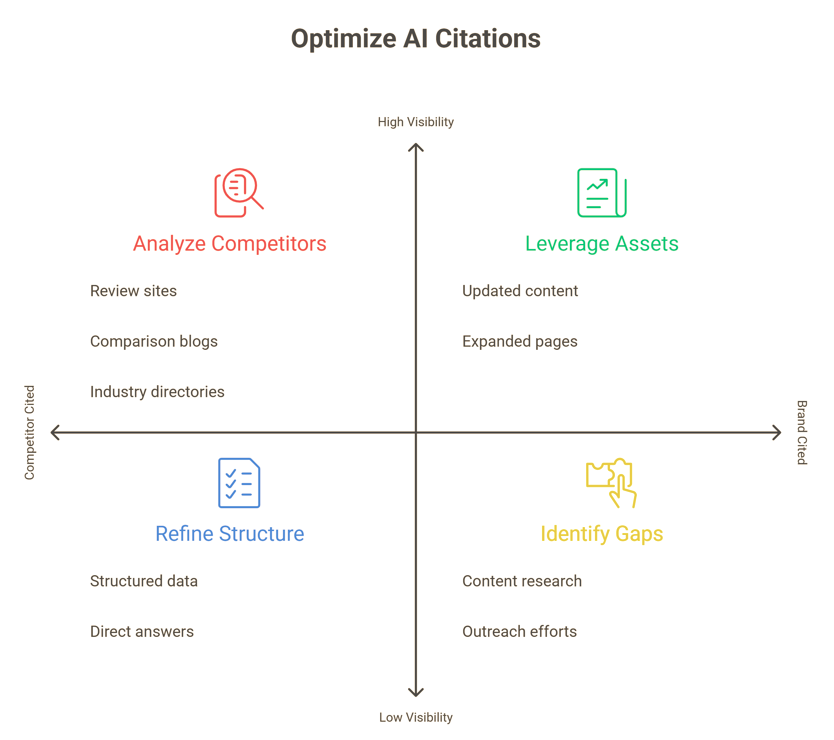
This connects directly back to good old-fashioned content strategy. AI tools tend to lean on pages that are clear, well-structured, and answer questions directly, so this is also a strong signal for what your own content should look like.
5. Don’t Forget to Track Your Competitors Too
Tracking only your own brand gives you half the picture. If your mentions drop one month, you won’t know if your brand actually got worse, or if the entire category just shifted toward a competitor.
Pick three to five direct competitors and run the same prompts for them. Over time, you’ll start to notice patterns, like specific competitors who always dominate “budget-friendly” prompts, while you might be stronger in “enterprise” or “local” prompts. This kind of insight helps you figure out exactly where to focus your content efforts next.
6. Set Up a Repeatable Tracking Schedule
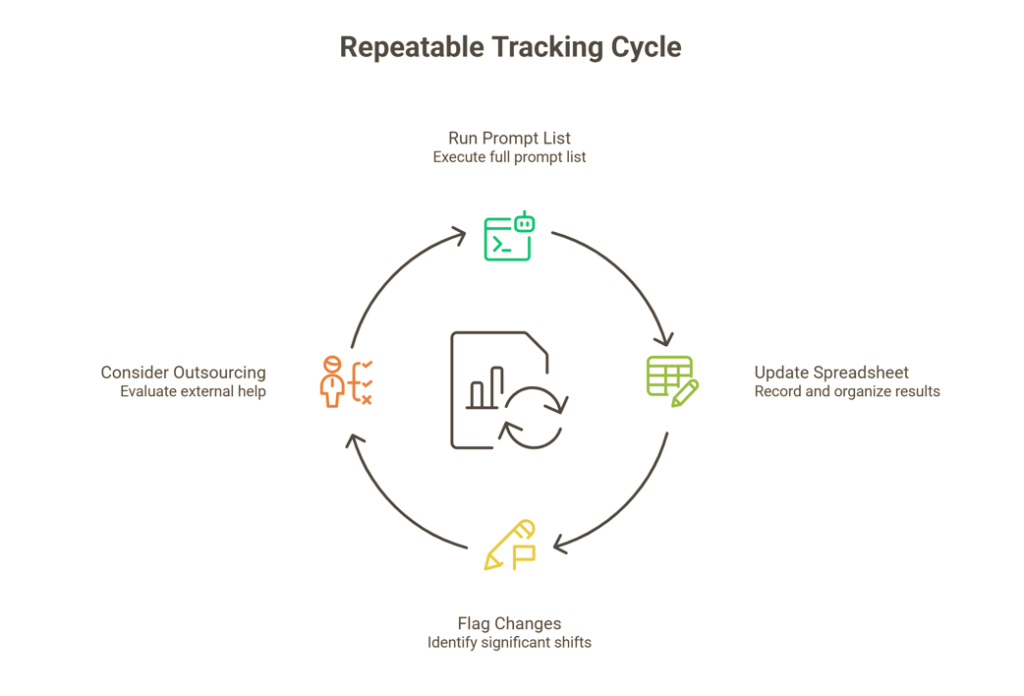
A one-time check tells you almost nothing useful on its own. AI answers shift over time as models update and as the web changes, so you need to treat this like an ongoing habit, not a one-off task.
A simple, sustainable schedule looks like this:
- Run your full prompt list once every two to four weeks.
- Keep your spreadsheet (or tool dashboard) updated so you can compare results over time.
- Flag any major changes, like a sudden drop in mentions or a competitor suddenly appearing where they weren’t before.
This is also where many small businesses decide it makes sense to bring in outside help, since manually running and logging dozens of prompts across multiple platforms every few weeks adds up fast. If you’d rather have a team handle this kind of ongoing tracking and strategy for you, it’s worth comparing SEO monthly packages to see what’s realistically included at different budget levels.
7. Use Dedicated AI Visibility Tools (When You’re Ready to Scale)
Manual tracking works great when you’re starting out with 20 to 30 prompts. But once you’re tracking 100+ prompts across five platforms and multiple competitors, it becomes nearly impossible to manage by hand.
This is where dedicated AI visibility platforms come in. Tools like OtterlyAI, Peec AI, Profound, and Semrush’s AI visibility toolkit are built specifically to automate this entire process; running your prompts on a schedule, tracking citations, and showing you sentiment and competitor data in one dashboard.
A few honest things to know before picking one:
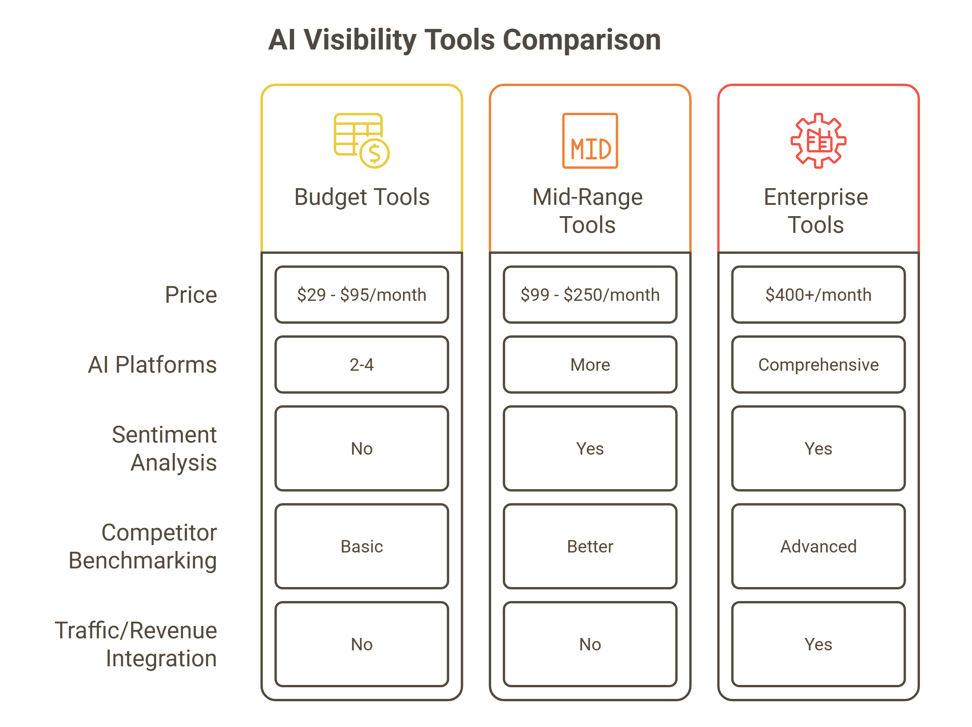
- Budget tools (around $29 to $95/month) are great for a basic weekly check across two to four AI platforms.
- Mid-range tools (around $99 to $250/month) usually add sentiment analysis, more platforms, and better competitor benchmarking.
- Enterprise tools (often $400+/month) tie AI visibility directly to traffic and revenue data, which makes sense if you’re already running a serious content and SEO operation.
If your budget is tight right now, it’s perfectly fine to stick with manual tracking for a few months first. Just make sure you’re consistent about it.
How to Actually Improve Your Brand Mentions in AI Search
Tracking is only half the job. Once you know where you stand, here’s how to actually move the needle:
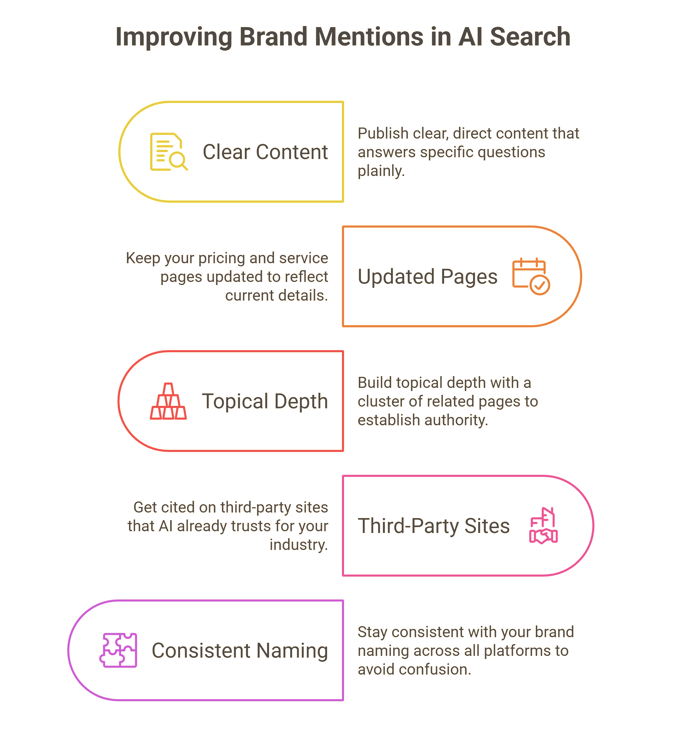
- Publish clear, direct content. AI tools favor content that answers a specific question plainly, without unnecessary fluff. If someone asks “how much does SEO cost,” your page should answer that clearly near the top, not bury it three scrolls down.
- Keep your pricing and service pages updated. AI tools often repeat outdated information if your own site isn’t clear about current details. If you offer hourly pricing, your SEO hourly rate page should reflect your current rates so AI tools (and humans) aren’t working off stale numbers.
- Build topical depth, not just one page. A single great page helps, but a cluster of related pages (pricing, packages, audits, comparisons) builds the kind of authority AI models tend to trust more.
- Get cited on third-party sites that AI already trusts. If a comparison blog or directory keeps showing up in AI answers for your industry, see if you can get listed or reviewed there.
- Stay consistent with your brand naming. If your business is described slightly differently across your website, social profiles, and directories, it can confuse AI models about who you actually are. Keep it consistent everywhere.
Common Mistakes to Avoid
A few things trip people up when they first start tracking AI mentions:
- Counting every mention as a win. A mention buried in a long list with no real endorsement isn’t the same as a recommendation. Don’t celebrate too early.
- Only testing one AI platform. Your visibility on ChatGPT can look completely different from your visibility on Perplexity or Gemini. Always check more than one.
- Using prompts that already include your brand name. If your test prompt is “Is [Your Brand] good for small businesses?”, you’re not measuring real visibility, you’re just confirming the AI knows your name exists.
- Giving up after one check. AI answers shift as models update. A bad result this month doesn’t mean it’ll stay that way next month, especially if you act on what you learn.
Final Thoughts
AI search isn’t replacing Google overnight, but it’s clearly becoming a major part of how people discover businesses, especially for service-based companies like SEO agencies, local shops, and B2B tools. Tracking brand mentions in AI search gives you a real look at whether you’re part of that conversation or sitting on the sidelines while competitors get picked instead.
Start small. Pick 20 to 30 real questions your customers might ask, run them across two or three AI platforms, and actually read the answers instead of just counting mentions. From there, build a simple habit of checking every few weeks, and use what you learn to sharpen your content.
And if you ever feel like this is eating up more time than you have, that’s a normal point to consider outside help. Before you commit to anything, it’s worth understanding typical SEO audit cost ranges so you know what a proper audit (including AI visibility) should realistically cost, and if you’re working with a UK-based budget, our breakdown of SEO costs in the UK can help you compare pricing before reaching out to anyone.
Either way, the brands that start paying attention to this now are the ones who’ll have a real head start once AI search becomes as normal as a Google search is today.