A year ago, ranking on Google was enough for most businesses.
Today, your potential customers are just as likely to ask ChatGPT, Google AI Overviews, Gemini, Claude, or Perplexity before they ever open a search results page.
That changes the rules.
AI assistants don’t simply list websites. They generate answers by selecting information they trust. If your brand isn’t being mentioned or cited, you’re losing visibility even if your pages still rank well in Google Search.
That’s why a new category of software has appeared over the past year: LLM optimization tools.
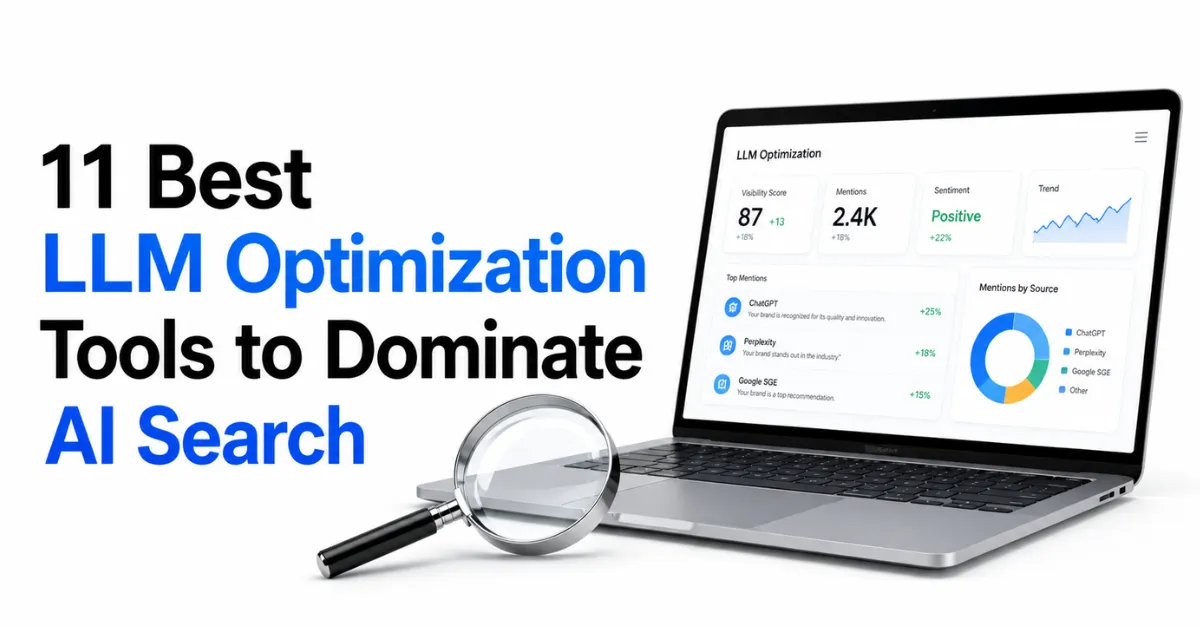
These platforms help you understand how AI models see your brand, which prompts trigger your visibility, where competitors are getting cited, and what you can improve to earn more mentions across AI search.
The problem is that almost every platform claims to do the same thing.
Some focus on monitoring brand mentions.
Others specialize in Google AI Overviews.
A few combine AI visibility with traditional SEO, while enterprise platforms include advanced reporting that many smaller businesses may never need.
After comparing the leading options, we’ve narrowed the list to the tools that are genuinely worth considering in 2026.
Whether you’re an SEO consultant, agency, SaaS company, ecommerce brand, or in-house marketing team, this guide will help you choose the platform that matches your goals and budget.
Our Top AI Visibility Tool Picks
If you only need a recommendation, start here.
| If You Need… | Recommended Tool |
| Best overall AI visibility platform | Profound |
| Best value for smaller businesses | Otterly AI |
| Best for agencies | Peec AI |
| Best for enterprise reporting | Semrush Enterprise AIO |
| Best for content optimization | AirOps |
| Best for technical AI SEO | Botify |
| Best for SEO teams already using Ahrefs | Ahrefs Brand Radar |
| Best all-in-one SEO + AI toolkit | Semrush AI Toolkit |
The detailed reviews below explain why each tool made the list, where it performs well, and which type of user will get the most value from it.
How We Selected These Tools
You’ll find dozens of articles recommending AI visibility software, but many simply repeat feature lists taken from product websites.
That doesn’t tell you whether a tool is actually useful once you start using it.
For this guide, we focused on the areas that matter when choosing an LLM optimization platform.
AI Platform Coverage
A tool that only monitors one AI model gives you an incomplete picture.
We gave preference to platforms that support multiple answer engines such as ChatGPT, Google AI Overviews, Gemini, Claude, Perplexity, Microsoft Copilot, and other major AI search experiences.
Quality of Visibility Reports
Seeing a mention count isn’t enough.
The better platforms explain where your brand appears, which prompts trigger those mentions, how often competitors are recommended instead, and how visibility changes over time.
That makes it much easier to decide what to improve next.
Actionable Recommendations
Some dashboards collect data but leave the analysis to you.
Others point out missing content, weak topical coverage, citation opportunities, and technical issues that may be limiting your visibility.
We gave higher rankings to tools that help users take action instead of simply displaying charts.
Ease of Use
Not every business has a dedicated SEO team.
A clean interface, straightforward reporting, and simple setup can save hours every month, especially for agencies and small marketing teams.
Overall Value
The most expensive platform isn’t automatically the best.
Some enterprise tools include advanced reporting that’s unnecessary for smaller businesses, while more affordable options provide everything most users need.
Instead of comparing prices alone, we considered whether each platform delivers enough value for its intended audience. If you’re also budgeting for SEO services, our guide to SEO monthly packages explains what businesses typically pay and what should be included.
What Should a Good LLM Optimization Tool Actually Do?
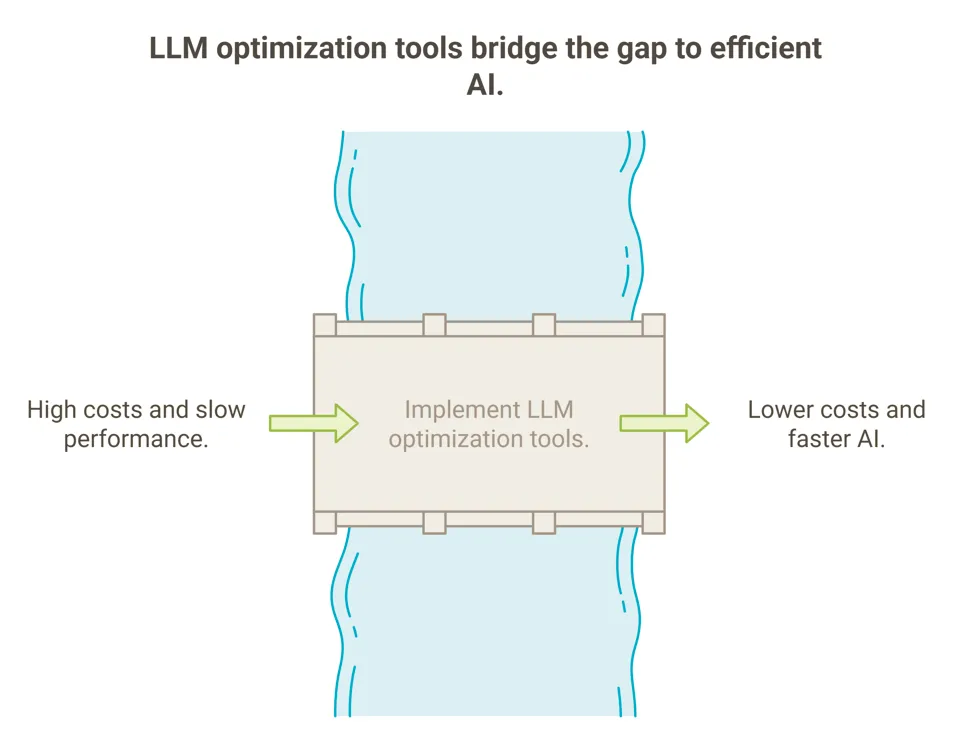
Before spending money on any platform, it’s worth knowing what separates a useful AI visibility tool from an expensive reporting dashboard.
A good platform should answer questions like these.
- Is my brand appearing in ChatGPT and Google AI Overviews?
- Which prompts generate mentions of my business?
- Which competitors are recommended more often?
- Which pages does AI use as citation sources?
- Has my visibility improved or declined over time?
- What changes should I make to increase AI mentions?
If a platform can’t answer most of those questions, it’s unlikely to become part of your long-term SEO strategy.
The best tools don’t just collect information. They help you turn that information into better content, stronger topical authority, and improved visibility across AI-powered search. Monitoring AI visibility is only part of the process, learning the best ways to track brand mentions in AI search helps you measure long-term performance more effectively.
1. Profound
Best for: Enterprise brands that need advanced AI visibility reporting.
Profound is one of the first names you’ll come across when researching AI visibility software, and for good reason.
Unlike traditional SEO platforms that later added AI tracking, Profound was built specifically for monitoring how brands appear inside AI-generated answers. That gives it a noticeable advantage when your priority is understanding what ChatGPT, Gemini, Perplexity, or Google AI Overviews are actually saying about your business.
The platform goes beyond counting mentions.
It tracks the prompts people use, measures how often your competitors appear, highlights the pages AI models cite most frequently, and helps marketing teams understand whether their visibility is improving over time.
For larger organizations managing multiple products or international campaigns, having all of this information in one place can save a significant amount of manual research.
What Makes Profound Different?
Most AI visibility tools answer one question.
“Did your brand appear?”
Profound answers several more.
It shows where your brand appeared, why it appeared, which competitors replaced you for other prompts, and which content is helping or hurting your AI visibility.
That extra context makes the reports much more useful when planning future content or GEO campaigns.
Key Features
- Tracks visibility across major AI search platforms
- Prompt monitoring
- Citation tracking
- Competitor benchmarking
- Share of voice reporting
- AI Shopping monitoring
- Team collaboration
- Enterprise reporting dashboards
Pros
- One of the most complete AI visibility platforms available
- Detailed reporting that’s easy to understand
- Excellent competitor tracking
- Strong support for enterprise marketing teams
- Frequently updated with new AI search features
Cons
- Higher pricing than most alternatives
- May be too advanced for freelancers or small businesses
- Some features are only available on higher-tier plans
Pricing
Profound doesn’t make all pricing publicly available, so most businesses will need to request a demo or contact the sales team for a custom quote.
Best For
Large brands, enterprise SEO teams, and companies that need detailed AI visibility reporting across multiple markets.
Verdict
If budget isn’t your biggest concern, Profound is currently one of the strongest choices for tracking AI visibility. Its reporting depth, competitor insights, and prompt analysis make it a platform that larger organizations can rely on as AI search becomes a bigger source of traffic.
2. Otterly AI
Best for: Small businesses, freelancers, and marketers looking for an affordable AI visibility tool.
Not every business needs enterprise-level reporting.
If your goal is simply to monitor how your brand appears in ChatGPT, Google AI Overviews, or Perplexity without spending hundreds of dollars every month, Otterly AI is one of the strongest options available.
The platform focuses on simplicity.
Instead of overwhelming users with dozens of reports and technical metrics, it highlights the information most businesses actually care about. You can see whether your brand appears for important prompts, monitor visibility changes over time, and identify opportunities to improve your presence across supported AI platforms.
That makes it a practical choice for businesses taking their first steps into Generative Engine Optimization.
Why It Deserves a Place on This List
Many AI visibility tools are built for large marketing departments.
Otterly AI takes a different approach.
It removes unnecessary complexity while still giving users enough data to understand whether their AI visibility is improving.
For consultants and small agencies managing multiple clients, that balance between usability and functionality is one of its biggest strengths.
Key Features
- AI search visibility tracking
- Google AI Overviews monitoring
- ChatGPT tracking
- Perplexity monitoring
- GEO audit reports
- Prompt-based visibility reports
- Scheduled reporting
Pros
- Easy to learn and use
- Affordable compared to enterprise platforms
- Clean reporting dashboard
- Suitable for beginners
- Fast setup process
Cons
- Limited advanced analytics
- Fewer customization options
- Doesn’t provide the same reporting depth as enterprise platforms
Pricing
Otterly AI offers multiple subscription plans, making it accessible for freelancers, startups, and growing businesses. The exact cost depends on the number of prompts and tracking requirements.
Best For
- Freelancers
- Small businesses
- SEO consultants
- Startups
- Marketing agencies with smaller clients
Verdict
If you’re new to AI visibility monitoring, Otterly AI offers one of the easiest ways to get started. It may not include every advanced feature found in premium platforms, but it covers the essentials well and delivers strong value for its price.
3. Peec AI
Best for: Agencies and marketing teams that manage multiple brands.
Peec AI has quickly become one of the most talked-about AI visibility platforms because it focuses on something many competitors overlook.
Instead of only tracking your own brand, it helps you understand how your visibility compares with competing businesses across AI-generated answers.
For agencies, this information is extremely valuable.
Clients don’t just want to know whether they’re mentioned by ChatGPT or Google AI Overviews. They also want to know why competitors appear more often and what can be done to close that gap.
Peec AI makes those comparisons much easier through competitor-focused reporting and prompt tracking.
What Makes Peec AI Different?
Several AI visibility tools provide basic mention tracking.
Peec AI goes further by helping users compare multiple brands inside the same dashboard.
If you’re responsible for several websites or clients, this saves time because you don’t have to switch between separate reports.
The platform also recommends prompts worth monitoring, making it easier to discover new opportunities without manually brainstorming every possible search query.
Key Features
- AI visibility monitoring
- Competitor benchmarking
- Prompt recommendations
- Citation tracking
- Share of voice reports
- Team workspaces
- Report sharing
Pros
- Excellent competitor comparison tools
- Easy-to-understand interface
- Good reporting for agencies
- Helpful prompt suggestions
- Supports multiple projects
Cons
- Advanced insights are more limited than some enterprise competitors
- Some additional AI platforms require higher-tier plans
- Pricing may be expensive for solo users
Pricing
Peec AI offers different subscription plans based on prompt limits and reporting requirements. Agencies usually receive better value because multiple projects can be managed from a single account.
Best For
- Digital marketing agencies
- SEO professionals
- Growing SaaS companies
- Businesses tracking several competitors
Verdict
Peec AI strikes a strong balance between usability and competitive analysis. If your work involves monitoring several brands rather than a single website, it’s one of the better options currently available.
4. Semrush Enterprise AIO
Best for: Large businesses that want AI visibility data alongside traditional SEO.
Semrush didn’t start as an AI visibility platform, but its Enterprise AIO capabilities have made it a serious option for companies that don’t want separate tools for SEO and AI search monitoring.
For businesses already relying on Semrush for keyword research, backlink analysis, site audits, and competitor research, adding AI visibility tracking keeps everything inside one ecosystem. Before investing in enterprise software, it’s also worth understanding typical SEO costs UK businesses should expect.
That’s its biggest advantage.
Instead of switching between multiple dashboards, marketing teams can compare traditional search performance with AI search visibility and identify where the two differ.
For example, a page may rank in Google’s top three results but never appear in ChatGPT recommendations. That gap is much easier to identify when both datasets are available together.
Why It Stands Out
Dedicated GEO tools focus only on AI visibility.
Semrush takes a broader approach.
It combines traditional SEO metrics with AI search insights, making it easier to understand how your overall search strategy is performing instead of treating AI optimization as a completely separate process.
For businesses already paying for Semrush, this integration can be more valuable than purchasing another standalone platform.
Key Features
- AI visibility tracking
- Google AI Overviews monitoring
- Organic SEO data
- Keyword research
- Backlink analysis
- Competitor research
- Site audits
- Reporting dashboards
Pros
- Combines SEO and AI visibility in one platform
- Familiar interface for existing Semrush users
- Strong reporting capabilities
- Excellent keyword database
- Saves time by reducing tool switching
Cons
- AI monitoring is not as detailed as dedicated GEO platforms
- Enterprise features may be expensive
- Some AI capabilities are still evolving
Pricing
Semrush Enterprise pricing is customized based on business requirements. Smaller businesses can also access AI-related features through selected Semrush plans, although enterprise functionality requires direct consultation.
Best For
- Large businesses
- Enterprise marketing teams
- Existing Semrush customers
- Companies managing both SEO and GEO strategies
Verdict
If your team already uses Semrush every day, adding Enterprise AIO makes more sense than replacing your entire workflow. While dedicated AI visibility platforms provide deeper AI reporting, Semrush offers one of the most complete all-in-one search marketing ecosystems available.
5. Ahrefs Brand Radar
Best for: SEO professionals who want to measure AI brand visibility alongside backlink and authority data.
Ahrefs has built its reputation on backlink analysis and organic search research, so it was only a matter of time before it entered the AI visibility space.
Instead of creating a completely separate product, Ahrefs introduced Brand Radar to help businesses understand how often they appear across AI-generated responses and how they compare with competitors.
The approach feels familiar to existing Ahrefs users.
Reports focus on brand visibility, competitor comparisons, and overall market presence rather than overwhelming users with dozens of experimental AI metrics.
This makes Brand Radar easier to adopt if your team already depends on Ahrefs for daily SEO work.
What Makes It Different?
Most dedicated AI visibility platforms are built around prompts.
Ahrefs approaches the problem from a brand authority perspective.
Rather than asking only whether AI mentions your company, it also helps explain how your authority, backlinks, and content ecosystem influence those mentions.
That broader context is particularly useful for businesses investing heavily in long-term SEO.
Key Features
- Brand visibility tracking
- Competitor benchmarking
- Share of voice reporting
- Organic keyword data
- Backlink analysis
- Content Explorer integration
- Historical performance reports
Pros
- Simple interface
- Excellent competitor insights
- Works naturally with existing Ahrefs data
- Reliable backlink database
- Useful for long-term authority building
Cons
- AI monitoring isn’t as advanced as specialist GEO platforms
- More suitable for existing Ahrefs users
- Premium pricing
Pricing
Brand Radar is available as part of Ahrefs’ expanding product ecosystem. Pricing depends on your subscription level and business requirements.
Best For
- SEO professionals
- Content publishers
- SaaS companies
- Existing Ahrefs subscribers
Verdict
If Ahrefs is already central to your SEO workflow, Brand Radar is an easy addition. It won’t replace enterprise AI visibility platforms, but it gives SEO teams a practical way to connect brand authority with AI search performance.
6. AirOps
Best for: Content teams that want to create AI-friendly content at scale.
Not every business needs another reporting dashboard.
Sometimes the biggest challenge isn’t measuring AI visibility. It’s producing content that AI platforms are actually willing to cite.
That’s where AirOps takes a different direction.
Instead of concentrating mainly on monitoring, AirOps helps teams research, create, optimize, and update content using structured workflows designed for modern search.
Many organizations use it to build repeatable content systems rather than publishing articles one by one.
For businesses producing dozens or even hundreds of pages each month, that can make a noticeable difference in consistency.
Why It Earned a Spot
Most AI visibility tools tell you what’s happening.
AirOps focuses on helping you improve the content that’s influencing those results.
It combines research, AI-assisted writing, workflow automation, and optimization into one platform, making it especially useful for content-heavy teams.
While it isn’t a replacement for dedicated visibility tracking software, it works well alongside those tools by helping implement the improvements they recommend.
Key Features
- AI-assisted content creation
- Content optimization workflows
- Prompt templates
- Research automation
- Team collaboration
- Content scaling
- Workflow automation
Pros
- Excellent for large publishing teams
- Saves time during content production
- Helps standardize quality
- Flexible workflow customization
- Strong collaboration features
Cons
- Not a dedicated AI visibility monitoring platform
- Requires planning to get the most value
- Better suited to ongoing content operations than occasional publishing
Pricing
AirOps offers several pricing tiers for individuals, teams, and larger organizations. Costs vary depending on workflow usage and collaboration requirements.
Best For
- Content marketing teams
- Agencies
- Publishers
- SaaS businesses
- Companies producing content at scale
Verdict
If your biggest challenge is creating high-quality, AI-friendly content consistently, AirOps deserves serious consideration. It complements AI visibility tools rather than competing directly with them, making it a valuable addition to a modern content workflow.
7. Similarweb AI Visibility
Best for: Businesses that want to measure traditional search and AI search in one place.
Most marketers already know Similarweb as a competitive intelligence platform. Over the past year, it has expanded beyond website traffic estimates by adding AI visibility data that helps businesses understand how they appear across modern answer engines.
Instead of replacing your existing SEO tools, Similarweb connects AI visibility with broader market insights.
This makes it easier to answer questions like:
- Is AI search sending fewer users to my competitors?
- Which brands dominate AI-generated recommendations?
- How is AI changing customer discovery in my industry?
That wider perspective is something many dedicated AI visibility tools don’t provide.
Why It Made This List
Most GEO platforms focus only on your brand.
Similarweb also looks at the competitive landscape.
If you’re planning long-term marketing strategy rather than monitoring a handful of prompts, those additional insights can help identify emerging opportunities before competitors notice them.
Key Features
- AI visibility monitoring
- Competitor intelligence
- Market analysis
- Traffic trends
- Share of voice reporting
- Industry benchmarking
- Historical performance tracking
Pros
- Excellent market intelligence
- Strong competitor analysis
- Combines traffic and AI visibility data
- Useful reporting dashboards
- Suitable for large marketing teams
Cons
- Premium pricing
- AI reporting is still less detailed than specialist GEO platforms
- More features than many small businesses need
Pricing
Pricing is customized according to business requirements and usually requires contacting the sales team.
Best For
- Enterprise businesses
- Large marketing teams
- Competitive research
- Market intelligence
Verdict
If competitive analysis is just as important as AI visibility tracking, Similarweb is one of the strongest all-round platforms available. It won’t replace a dedicated GEO tool completely, but it provides valuable context that most competitors cannot match.
8. ZipTie
Best for: Businesses that want detailed AI reporting with practical optimization insights.
ZipTie is one of the newer names in the AI visibility space, but it has gained attention because it focuses on actionable reporting instead of simply displaying performance metrics.
Many dashboards stop after showing where your brand appears.
ZipTie goes a step further by highlighting why certain pages perform better, which prompts create opportunities, and where improvements are most likely to increase AI visibility.
For content teams that regularly update existing pages, these recommendations can save considerable research time.
What Makes ZipTie Different?
Its reporting is built around decision-making.
Instead of overwhelming users with raw data, the platform highlights patterns that deserve attention first.
That makes it particularly useful for businesses that want clear priorities instead of hundreds of disconnected metrics.
Key Features
- AI visibility tracking
- Prompt monitoring
- Citation analysis
- AI success scoring
- URL-level reporting
- Optimization suggestions
- Historical reporting
Pros
- Detailed reporting
- Easy-to-read dashboards
- Useful optimization recommendations
- Strong prompt analysis
- Good content-level insights
Cons
- Supports fewer AI platforms than some competitors
- Still expanding feature set
- Better suited for growing businesses than enterprise organizations
Pricing
ZipTie offers several subscription options based on usage and tracking requirements.
Best For
- SEO agencies
- Content teams
- SaaS companies
- Businesses focused on Google AI Overviews and ChatGPT
Verdict
ZipTie delivers a good balance between monitoring and optimization. If you want more than simple visibility reports without paying enterprise prices, it’s a strong option.
9. Authoritas
Best for: SEO professionals who need detailed AI search reporting.
Authoritas has been known in enterprise SEO for years, particularly for large-scale rank tracking.
Its AI visibility capabilities build on that experience by helping businesses understand how AI-generated answers influence overall search visibility.
Instead of treating SEO and GEO as completely separate channels, Authoritas helps connect the two.
This makes it easier to understand whether changes in AI search are affecting traditional organic performance.
Why Consider Authoritas?
Businesses managing thousands of keywords often need more than mention tracking.
They also need reliable reporting that connects AI visibility with existing SEO campaigns.
Authoritas is designed for that type of workflow.
Key Features
- AI visibility reports
- Enterprise rank tracking
- Share of voice analysis
- Competitor monitoring
- Historical reporting
- Custom dashboards
- API access
Pros
- Enterprise-ready reporting
- Strong historical data
- Excellent scalability
- Reliable tracking
- Flexible reporting
Cons
- Higher learning curve
- Enterprise pricing
- More features than smaller businesses require
Pricing
Pricing is available through custom enterprise plans.
Best For
- Enterprise SEO teams
- Agencies
- Large publishers
- International businesses
Verdict
Authoritas is built for organizations that manage large SEO operations. While it may be excessive for smaller businesses, enterprise users will appreciate its reporting depth and scalability.
10. Botify
Best for: Technical SEO teams focused on AI crawlability.
Most AI visibility platforms concentrate on monitoring results after AI models have processed your content.
Botify focuses on something that happens much earlier.
It helps businesses understand whether AI crawlers can properly access, render, and interpret their websites. Running an SEO audit cost assessment beforehand can also uncover technical issues that affect both search engines and AI crawlers.
That’s important because even outstanding content may struggle to appear in AI-generated answers if technical issues prevent crawlers from understanding it correctly.
What Makes Botify Different?
Botify isn’t trying to become another AI monitoring dashboard.
Its strength lies in technical optimization.
Large ecommerce websites, publishers, and enterprise brands often have thousands of pages, making crawl efficiency just as important as content quality.
Botify helps identify technical problems before they reduce search visibility.
Key Features
- AI crawler analysis
- Crawl optimization
- Technical SEO audits
- Indexation reporting
- Log file analysis
- Site architecture insights
- Performance monitoring
Pros
- Excellent technical analysis
- Strong crawl reporting
- Ideal for enterprise websites
- Useful for large ecommerce stores
- Trusted by technical SEO teams
Cons
- Limited AI visibility monitoring
- Technical learning curve
- Better as a companion tool than a standalone GEO platform
Pricing
Pricing depends on website size and business requirements.
Best For
- Enterprise websites
- Ecommerce businesses
- Technical SEO specialists
- Large publishers
Verdict
Botify isn’t designed to replace AI visibility platforms. Instead, it strengthens the technical foundation that helps AI systems discover and understand your content more effectively.
11. Semrush AI Toolkit
Best for: Businesses that want AI visibility features without changing their existing SEO workflow.
Many companies already rely on Semrush every day.
For those businesses, using the AI Toolkit is often more practical than purchasing a completely separate platform.
It extends the familiar Semrush ecosystem by adding AI-related insights while keeping keyword research, backlink analysis, content optimization, and reporting together.
That convenience is its biggest advantage.
Although dedicated GEO platforms still provide deeper AI monitoring, many businesses won’t need that level of specialization.
Key Features
- AI visibility insights
- Keyword research
- Backlink analysis
- Site audits
- Competitor analysis
- Content optimization
- Unified reporting
Pros
- Familiar interface
- Easy integration with existing SEO workflows
- Excellent all-in-one platform
- Strong reporting
- Reliable support
Cons
- AI visibility features are less advanced than specialist tools
- Premium subscription required
- Enterprise features cost significantly more
Pricing
Available through selected Semrush plans and enterprise solutions.
Best For
- Existing Semrush users
- SEO agencies
- Marketing teams
- Businesses that prefer an all-in-one platform
Verdict
If your organization already depends on Semrush, adding its AI Toolkit is a logical next step. Dedicated AI visibility platforms still offer more advanced monitoring, but the convenience of managing everything in one ecosystem makes it an attractive option for many teams.
Which LLM Optimization Tool Should You Choose?
Choosing the right platform depends more on your goals than on the number of features it offers.
| If Your Priority Is | Recommended Tool |
| Best overall platform | Profound |
| Best budget option | Otterly AI |
| Best for agencies | Peec AI |
| Best for enterprise reporting | Semrush Enterprise AIO |
| Best content workflows | AirOps |
| Best technical optimization | Botify |
| Best competitive intelligence | Similarweb |
| Best enterprise SEO reporting | Authoritas |
| Best integrated SEO platform | Semrush AI Toolkit |
| Best for existing Ahrefs users | Ahrefs Brand Radar |
Final Thoughts
AI search is changing faster than traditional SEO ever did.
Tracking keyword rankings alone is no longer enough if your audience is finding products, services, and recommendations through ChatGPT, Google AI Overviews, Gemini, Claude, and other answer engines.
The right LLM optimization tool helps you understand where your brand appears, why competitors earn more visibility, and what changes can improve your chances of being cited in AI-generated answers.
For enterprise organizations that need the most comprehensive reporting, Profound remains the strongest overall choice.
If you’re looking for a more affordable starting point, Otterly AI offers excellent value without overwhelming new users.
Agencies managing multiple clients should consider Peec AI, while businesses already invested in Semrush or Ahrefs will often benefit from expanding the tools they already use instead of adopting another standalone platform.
The best choice ultimately depends on your budget, team size, and how deeply AI search fits into your overall marketing strategy. If you’re hiring outside help, comparing the average SEO hourly rate can help you choose the right consultant or agency.
Frequently Asked Questions
What is an LLM optimization tool?
An LLM optimization tool helps businesses monitor and improve how their brand appears in AI-powered search platforms such as ChatGPT, Google AI Overviews, Gemini, Claude, and Perplexity.
Are LLM optimization tools different from traditional SEO tools?
Yes. Traditional SEO tools focus on keyword rankings, backlinks, and organic traffic. LLM optimization tools measure AI visibility, brand mentions, citations, prompt performance, and share of voice across AI-generated answers.
Which LLM optimization tool is best for beginners?
Otterly AI is one of the easiest platforms for beginners because it offers a simple interface, straightforward reporting, and affordable pricing.
Can AI visibility tools improve rankings in ChatGPT?
These tools don’t directly improve rankings. Instead, they help identify content gaps, technical issues, and optimization opportunities that can increase the likelihood of your brand being mentioned in AI-generated responses.
Do I still need traditional SEO if I use an AI visibility tool?
Absolutely. Strong SEO remains the foundation for AI visibility. AI optimization works best when combined with high-quality content, technical SEO, topical authority, and a well-structured website.